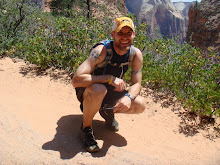
One of my biggest weaknesses is that I'm extremely hesitant to ask for help. I like to think that I can handle any situation that I'm confronted with. But during my last several years at my former place of employment and my first couple months in Peace Corps, I've grown up a little and am not quite as shy about asking for help or support when I need it. This is one of those times when I really need help. And I'm not asking just on my behalf, but also on behalf of my good friend Chris (a fellow Peace Corps Volunteer), and an awesome Kenyan family (the Kamau family) that Chris and I befriended during our training in the town of Loitokitok. I'll explain a little more below, but the short version is that Chris and I are in the process of starting an education fund to help send three of our close Kenyan friends (John, Joyce, and James Kamau) to university here in Kenya. They are extremely bright and have high aspirations, but without more education, their futures are very uncertain (at best) and honestly, they are likely to be caught in the poverty cycle that traps so many young adults here.
As most of you know, I've been in Kenya for over three months now, and it has been a wild ride. The first seven weeks I spent training (ie, learning Kiswahili, about the Kenyan culture, how to assimilate into a community, and how small business works in Kenya) in a small town just over the border from Mt. Kilimanjaro. During those seven weeks, each of us trainees lived with a Kenyan host family, kinda like a foreign exchange student program. The families were responsible for feeding us, sheltering us, and helping us to gain our footing in a very new and different place. But what I wasn't really expecting is the way they took us in as part of their families. Even now that I've been away for a month, they still call regularly to check up on me and make sure everything is ok. Most Kenyan families do not enjoy the same comforts we take for granted (e.g., electricity, running water, flush toilets, a shower) and most have a very hard time making ends meet, but they always insist on sharing what they have and they are the most welcoming people I've ever met.
During our training in Loitokitok, I became really close friends with all of my fellow volunteers, but especially a guy named Chris McKeown, who also happens to be from Pennsylvania. I can't say enough great things about Chris as a person and as a friend. I spent a lot of time at Chris' house studying Kiswahili and just hanging out, and I got to know his host family as well as I knew my own. Chris' has two Kenyan brothers, John and James, and a sister, Joyce, that lived with him at home, as well as his Kenyan mama (mother) and baba (father). It was pretty much a celebration every time a visitor arrived, and I loved hanging out with all of them. As Chris and I got to know his host family better, they opened up to us and shared with us just how difficult life is for them (and most families here in Kenya). Just before we left for Nairobi for the volunteer swearing-in ceremony a month ago, Chris' family told him how much of a struggle it is for them to make ends meet and he learned that there is no way they will be able to send John, Joyce, and James to university. All three have graduated from secondary school (i.e., high school) and are very bright, hard-working, and have aspirations for higher education and professional jobs, but they do not have the means to save for university tuition and fees. John is currently operating a taxi service using his motorcycle to try to help support the family. Joyce spends her entire day, from 5:30 am to 9:30 pm, taking care of all of the household duties including, cooking meals, cleaning the house and dishes, washing clothes, and taking care of the goats and chickens, so she has no time or means available to save money. James also does whatever work he can find in the neighborhood to help support the family. Without a university education, it will be almost impossible for them to break out of their current routines and find professional jobs that will allow them to support themselves and their future families.
Chris and I talked a lot about this, and we decided that we weren't just going to sit around when there was something we could do to help them out. So we began making arrangements to begin a fund with our own money to help send John, Joyce, and James to university in Kenya. As luck would have it, a former Peace Corps volunteer that served in the same town we were training in (Loitokitok) came to talk to all of us one afternoon during our training. His name is Bradley Broder, and he was so deeply affected by his time in Kenya that he started his own non-profit organization called the Kenya Education Fund (KEF) - http://www.kenyaeducationfund.org - in 2005 after his Peace Corps service to help pay secondary school fees to enable bright Kenyan students from disadvantaged families to continue their secondary education. Bradley is one of those guys you meet who is completely genuine, easy to talk to, and bends over backwards to help you out. Although the primary mission of Bradley's non-profit organization is to help pay fees for secondary school (i.e., high school) students in Kenya, Bradley was more than happy to allow us to use his organization to set up a fund to securely and efficiently raise and distribute money to allow John, Joyce, and James to attend university. Another benefit of using the KEF is that it is a 501(c)(3) non-profit organization, meaning that all donations are tax-deductible. The other really cool thing about it that the dollar-to-shilling exchange rate is very favorable now, so raising enough money is something that is truly attainable.
As it stands right now, we are in the process of finalizing arrangements for the establishment of the university fund for John, James, and Joyce through Bradley's non-profit organization, the KEF. Chris has already contacted his family & friends, and I'm just starting to do that on my end. If you would be interested in donating to this project or helping us to raise money to enable John, Joyce, and James to attend university, please drop me and Chris a line (gavhoch@gmail.com and chris.mckeown28@gmail.com) and Chris and I will send additional details once we've finalized the arrangements with Bradley's non-profit organization. We are hoping that everyone involved in this project will get to know the Kamau children (John, Joyce, and James) as well as Chris and I do and see for yourselves what we see in them.
Chris and I are extremely excited that the project will officially get off the ground in the very near future and we are determined and committed to making this project a reality. Of course, we would be very grateful for any support you (or anyone you know!) may be able to provide to make this happen and help John, Joyce, and James attend university here in Kenya. If you have any questions, or want to know more about this project, feel free to drop me a line anytime. Thanks.
Sunday, February 15, 2009


Saturday, February 14, 2009
Valentines Day 2009 and Free Maid Service
Another year, another non-eventful Valentines Day. I had actually stayed up very late last night making a nice, friendly card for a certain gal, but in the end I totally chickened out and decided not to give it to her, even though I'm 110% sure it would have been received very happily. I've had so many bad experiences with this sort of thing before - seriously, every time I get completely, utterly obliterated - so I decided to hold onto it for myself. It's actually quite a nice card, and since I've only twice received a valentine card since my fellow classmates were forced to drop one in my horribly-designed bag during elementary school (thanks Mom and a very awesome, much-missed friend who also delivered a large box of scrumptious chocolates - you guys are great!), I'm keeping that card for myself... unless I come to my senses and give it a day or too late, which is lame, but not as lame as not giving it at all.
Whatever happens, this year's Valentines Day is much preferable to last year's version when I was discarded (ok, that's really harsh, it wasn't exactly like that) the day before. Anyway, if things had gone much further I probably wouldn't be in Kenya today and seeing and experiencing a whole different way of life. I am not going to make a judgment call on which path would have been better because I think both could have been really awesome - but it was definitely a critical point in my life. Two paths diverging in 180-degree directions. Sometimes I like to think about what would have happened if things would have turned out differently in my last relationship (for those keeping count, that would be only #2 - can't wait to see what sort of comments this generates!), there are a million variables in life, more than a few of which we aren't even in control of ourselves (directly, that is). There are about three to five critical points in my life where I think an either/or decision has influenced the rest of that pathway (i.e., my life). Someone once tried to make this same an analogy with a tree, which I thought made pretty good sense. At the bottom it goes pretty much one way (up!), then the trunk splits into several large branches, and then progressively smaller branches and then twigs all the way up. Depending on what direction you take at each opportunity you encounter a new branch or twig, you can end up in a different part of the tree - or back on the ground :( I don't think I need to explain how this relates to the paths one can take in life. But the one change I would make to this analogy is that I like to think of myself as a monkey (a very daft and well-mannered monkey, of course) that is able to make the leap to another branch far away and actually hold on when I get there, even though I may be dangling upside down hanging on by three toes. If you can't tell, for all of my complaining - which I do a lot of - I actually love getting myself into difficult situations and then figuring them out/getting through them and being successful to boot, well, most of the time... ok ok, maybe half the time. :)
One thing I wasn't quite sure how I'd handle was the return to an extremely frugal way of life. I wasn't living like a king when I was in Lafayette, California, but it was freakin' California!!! You can't help living it up a little when you are there for 10 years and you are making a really decent living. I didn't really think about the price of things too much - if I wanted something, my litmus test was if I would use it a lot or it "increased net happiness" (a totally stolen phrase, thanks you-know-who :) ) - things that would either make me or my family & friends happy; for me personally, things like my carbon-frame road bike, 12 pairs of running shoes every year, 15 - 20 yogurts a week, my fast Acura, - excesses that I certainly didn't need, but made life much more enjoyable on a daily basis. Anyway, those things are given away or on hold/in storage until/if I return to the U.S. Yes, I said "if", remember that tree analogy - who knows what's going to happen in two years - there are a lot of distant branches and other trees I've got my eye on. :)
It makes me happy that I pay 15 shillings (about 20 cents) for lunch most days, and that is my "big" meal. When I go into the supermarket, I debate whether I should get the 35-shilling bottle of yogurt (not even 50 cents US), and I when I want candy, I eat the baking chocolate instead of the regular chocolate because it costs 20 shillings less (i.e., a handful of pennies). I have no shelves or table in my "kitchen"/sitting room and just shove my food into a pile of plastic tupper-ware type containers, which I label and stack neatly in rows and columns on the floor (shout-out to my older brother Jeremy - OH YEAH! You know what I'm talkin' about!). I've shopped around for shelves and they are at least 2000 - 3000 shillings (i.e. the equivalent of about 40 US Dollars, which is nothing), but I'd have to haul them awkwardly uphill three or four kilometers, so the containers are just fine. And those ants I was complaining about in an earlier post, they are actually my best friends. Not only do they not bite me, but they act as a free maid service. If I drop food on the floor in the morning and come back in the evening, it is completely gone. This morning, some kind of maggot-type worm fell from the ceiling and landed on my buttered bread - which I totally ate without a second thought, btw. I tossed him on the floor, gave him a little tappy-tappy with my sandals, and left him for my friends. Before I left for work, they had already descended upon him.
Tomorrow I'm really going to write that post that I've been meaning to write for a while about the very important project I'm working on with my really good friend Chris. So, please check back in tomorrow!!! Goodnight... er, morning!
Whatever happens, this year's Valentines Day is much preferable to last year's version when I was discarded (ok, that's really harsh, it wasn't exactly like that) the day before. Anyway, if things had gone much further I probably wouldn't be in Kenya today and seeing and experiencing a whole different way of life. I am not going to make a judgment call on which path would have been better because I think both could have been really awesome - but it was definitely a critical point in my life. Two paths diverging in 180-degree directions. Sometimes I like to think about what would have happened if things would have turned out differently in my last relationship (for those keeping count, that would be only #2 - can't wait to see what sort of comments this generates!), there are a million variables in life, more than a few of which we aren't even in control of ourselves (directly, that is). There are about three to five critical points in my life where I think an either/or decision has influenced the rest of that pathway (i.e., my life). Someone once tried to make this same an analogy with a tree, which I thought made pretty good sense. At the bottom it goes pretty much one way (up!), then the trunk splits into several large branches, and then progressively smaller branches and then twigs all the way up. Depending on what direction you take at each opportunity you encounter a new branch or twig, you can end up in a different part of the tree - or back on the ground :( I don't think I need to explain how this relates to the paths one can take in life. But the one change I would make to this analogy is that I like to think of myself as a monkey (a very daft and well-mannered monkey, of course) that is able to make the leap to another branch far away and actually hold on when I get there, even though I may be dangling upside down hanging on by three toes. If you can't tell, for all of my complaining - which I do a lot of - I actually love getting myself into difficult situations and then figuring them out/getting through them and being successful to boot, well, most of the time... ok ok, maybe half the time. :)
One thing I wasn't quite sure how I'd handle was the return to an extremely frugal way of life. I wasn't living like a king when I was in Lafayette, California, but it was freakin' California!!! You can't help living it up a little when you are there for 10 years and you are making a really decent living. I didn't really think about the price of things too much - if I wanted something, my litmus test was if I would use it a lot or it "increased net happiness" (a totally stolen phrase, thanks you-know-who :) ) - things that would either make me or my family & friends happy; for me personally, things like my carbon-frame road bike, 12 pairs of running shoes every year, 15 - 20 yogurts a week, my fast Acura, - excesses that I certainly didn't need, but made life much more enjoyable on a daily basis. Anyway, those things are given away or on hold/in storage until/if I return to the U.S. Yes, I said "if", remember that tree analogy - who knows what's going to happen in two years - there are a lot of distant branches and other trees I've got my eye on. :)
It makes me happy that I pay 15 shillings (about 20 cents) for lunch most days, and that is my "big" meal. When I go into the supermarket, I debate whether I should get the 35-shilling bottle of yogurt (not even 50 cents US), and I when I want candy, I eat the baking chocolate instead of the regular chocolate because it costs 20 shillings less (i.e., a handful of pennies). I have no shelves or table in my "kitchen"/sitting room and just shove my food into a pile of plastic tupper-ware type containers, which I label and stack neatly in rows and columns on the floor (shout-out to my older brother Jeremy - OH YEAH! You know what I'm talkin' about!). I've shopped around for shelves and they are at least 2000 - 3000 shillings (i.e. the equivalent of about 40 US Dollars, which is nothing), but I'd have to haul them awkwardly uphill three or four kilometers, so the containers are just fine. And those ants I was complaining about in an earlier post, they are actually my best friends. Not only do they not bite me, but they act as a free maid service. If I drop food on the floor in the morning and come back in the evening, it is completely gone. This morning, some kind of maggot-type worm fell from the ceiling and landed on my buttered bread - which I totally ate without a second thought, btw. I tossed him on the floor, gave him a little tappy-tappy with my sandals, and left him for my friends. Before I left for work, they had already descended upon him.
Tomorrow I'm really going to write that post that I've been meaning to write for a while about the very important project I'm working on with my really good friend Chris. So, please check back in tomorrow!!! Goodnight... er, morning!
Sunday, February 8, 2009
My Daily Walk and Other Random Comments
Another Sunday, and another visit to the internet cafe. Unfortunately, today it is mostly for work. I am in the process of doing an initial screening review for about 35 proposals for funding grants for one of the organizations that I just started working with this past week - COMPACT. COMPACT is an environmental group funded by the United Nations Development Program (UNDP) which promotes and funds environmental work in the Mt. Kenya region. I am supposed to have my review completed by tomorrow morning (I got it Friday afternoon!), but there is a lot of information to go through and I don't want a group to have their project rejected because I didn't take the time to carefully review their proposal. The other difficult part is that I haven't had access to a computer until now, so as usual, I'm doing the best I can. It's actually quite interesting to learn what all of these groups are doing and I think it's going to really benefit me in the long run to get to know what all is going on in my area. But right now it is a lot of work. And I still haven't found time to run at site and it is going on four weeks now. I really need to start carving some time out on a daily basis...
In more interesting news, I thought I'd share a little bit about my daily walk to town. I live about two miles north of town just off the main paved road. I say "main paved road" because most roads here are not paved. And those that are are usually in some moderate to advanced state of disrepair. If any of you ever come to visit me, we will go outside my house and stand at the main road, and I guarantee you will be entertained/surprised. There is a long, straight, flat stretch of road going to the north that is not in the best of shape. So, most drivers swerve all over the place, including on and off the road, to avoid the many potholes/patches of missing road. It looks like a long line of cars weaving half-hazardly all over the place when you look at it from a distance. I know I'm probably being culturally insensitive here, but I'm really just stating fact. Also, in Kenya, everywhere is a passing zone, even if there really isn't enough room to pass. I'm actually pretty glad I don't have to ride in a vehicle very often and that I'm not riding a bike, because when you are on the tarmac (i.e., the road), you are definitely taking your life into your hands. Every time I hear a loud and extended honk, I wait to hear the crunching of metal, but so far, I've only seen a lot of near misses - thankfully.
And most people here do not have cars, so there is always a ton of foot traffic on the wide dirt paths on one or both sides of the road. Pretty much any time of day, there is a constant stream of foot traffic to and from town. It's refreshing to see so many people out walking, even if it is out of necessity and not because they just want to walk. Ok, so my walk to town is about two miles, as I said - mostly downhill on the way to and uphill on the way back. There are about 100 little "dukas" - Swahili for "shop/store" - along the way, most of the wooden stand variety. That is, most are a collection of tree branches nailed together with a little thatching or plastic over the top and on the sides and then a large table-top inside where the merchants put all of their goods. Most of these stands sell fruits and vegetables, but some have sweets (i.e., candy) or jeri cans (for hauling water) or other various junk, I mean consumables. I have about 5 or 6 stands that I always stop at on the way home because I know the owners who are really cool and its also a good chance for me to practice my Kiswahili. I'll write another post about the kids here sometime - that topic deserves it's own special place - but the children here are absolutely fascinated by "mzungu" (i.e., white people).
Oh yeah, my walk... so Mt. Kenya is almost always in view for the entire walk, which is pretty sweet. Unfortunately, I am still quite far from the mountain, so I really can't go hiking on the mountain during the weekend even if I wanted to. But I will make it to the top before I leave! I also cross both rivers (the Likii and Nanyuki Rivers) that I'm working with/on, so it's helpful to see the river levels every morning, and there is usually always something going on at the river (i.e., someone illegally taking water out or dumping something in - today I saw a man stop and do his part to "contribute" to the river flow - right in front of a whole group of people, which isn't really that odd here). Then it's on into town, which is getting quite dusty now because it is the beginning of one of the dry seasons here. Whenever a car drives by, there is usually a big cloud of dust and also a black cloud of exhaust in most cases. Air pollution is definitely going to be an issue here as the standard of living goes up and more people get vehicles, but I suppose I'll try to deal with one issue at a time and stick to water issues for the immediate future.
Time to get back to work, catch you all soon!
In more interesting news, I thought I'd share a little bit about my daily walk to town. I live about two miles north of town just off the main paved road. I say "main paved road" because most roads here are not paved. And those that are are usually in some moderate to advanced state of disrepair. If any of you ever come to visit me, we will go outside my house and stand at the main road, and I guarantee you will be entertained/surprised. There is a long, straight, flat stretch of road going to the north that is not in the best of shape. So, most drivers swerve all over the place, including on and off the road, to avoid the many potholes/patches of missing road. It looks like a long line of cars weaving half-hazardly all over the place when you look at it from a distance. I know I'm probably being culturally insensitive here, but I'm really just stating fact. Also, in Kenya, everywhere is a passing zone, even if there really isn't enough room to pass. I'm actually pretty glad I don't have to ride in a vehicle very often and that I'm not riding a bike, because when you are on the tarmac (i.e., the road), you are definitely taking your life into your hands. Every time I hear a loud and extended honk, I wait to hear the crunching of metal, but so far, I've only seen a lot of near misses - thankfully.
And most people here do not have cars, so there is always a ton of foot traffic on the wide dirt paths on one or both sides of the road. Pretty much any time of day, there is a constant stream of foot traffic to and from town. It's refreshing to see so many people out walking, even if it is out of necessity and not because they just want to walk. Ok, so my walk to town is about two miles, as I said - mostly downhill on the way to and uphill on the way back. There are about 100 little "dukas" - Swahili for "shop/store" - along the way, most of the wooden stand variety. That is, most are a collection of tree branches nailed together with a little thatching or plastic over the top and on the sides and then a large table-top inside where the merchants put all of their goods. Most of these stands sell fruits and vegetables, but some have sweets (i.e., candy) or jeri cans (for hauling water) or other various junk, I mean consumables. I have about 5 or 6 stands that I always stop at on the way home because I know the owners who are really cool and its also a good chance for me to practice my Kiswahili. I'll write another post about the kids here sometime - that topic deserves it's own special place - but the children here are absolutely fascinated by "mzungu" (i.e., white people).
Oh yeah, my walk... so Mt. Kenya is almost always in view for the entire walk, which is pretty sweet. Unfortunately, I am still quite far from the mountain, so I really can't go hiking on the mountain during the weekend even if I wanted to. But I will make it to the top before I leave! I also cross both rivers (the Likii and Nanyuki Rivers) that I'm working with/on, so it's helpful to see the river levels every morning, and there is usually always something going on at the river (i.e., someone illegally taking water out or dumping something in - today I saw a man stop and do his part to "contribute" to the river flow - right in front of a whole group of people, which isn't really that odd here). Then it's on into town, which is getting quite dusty now because it is the beginning of one of the dry seasons here. Whenever a car drives by, there is usually a big cloud of dust and also a black cloud of exhaust in most cases. Air pollution is definitely going to be an issue here as the standard of living goes up and more people get vehicles, but I suppose I'll try to deal with one issue at a time and stick to water issues for the immediate future.
Time to get back to work, catch you all soon!
Sunday, February 1, 2009
Why I'm Here
It is Sunday again, and after waiting for an hour for my usual internet cafe to open, I decided to try to find another one in town. You never quite know if the place you are headed to is going to be open (or accessible), so it's always a good idea to have a backup plan. This applies to pretty much everything - electricity availability, water availability, computer availability (at work), and availability of people - even if you've scheduled a meeting - and so many other things. So, I have candles/ a headlamp, several big jugs of water, a notebook for writing and doing math - I can't believe I still know how to do long division! -, and I always carry a book or some sort of work that I can do by myself. Things that I would normally take for granted in America I have to think about a little more here - that is one of the big differences.
So, I don't think I've actually told many of you what the heck I'm doing here in Kenya. Well, for starters I am a Peace Corp Volunteer, officially in the business/information communication technology (i.e., computers) sector, but my specific project deals with environmental work, which is what I was doing for the last seven years prior to coming to Africa. Just as a little background, I worked as an environmental consultant doing mainly air pollution work with especially awesome people at a firm called ENVIRON (www.environcorp.com). I had a very comfortable life and lived in a beeeeeautiful part of the country - the SF Bay Area. It was very difficult to leave friends and family, but this is something I had wanted to do for quite a while, and the timing was finally right.
I didn't know that I would be working on an environmental project here in Kenya - in fact, I had very little idea what I would be doing until the very end of training three weeks ago. One of the big things about Peace Corps is that you have to have faith in the system and trust that things are going to work out. And if they don't, you work them out yourself after the fact. I am lucky and have a pretty great APCD (i.e., my boss/supervisor) who did a lot of hard work and found a great match for me with a group of organizations that deal with water use and conservation. I am working with three different organizations in an around Nanyuki, Kenya - two river water users' associations and an organization affiliated with the United Nations Development Program (UNDP) that promotes environmental conservation and restoration specifically in the Mt. Kenya area. Mt. Kenya is the second tallest mountain on the African continent, reaching over 17,000 feet. It is an extinct volcano, and it sits by itself as a massive mountain, much like most of the Cascades in Oregon/Washington for those of you familiar with that part of the country. There is a glacier on top of Mt. Kenya that feeds a dozen or more rivers that provide a lifeline to communities at the base of the mountain. The water river users' associations that I am working with cover two of those rivers that come down on the northwest part of the mountain.
The population of Kenya is increasing very quickly, thus there is increasing demand for resources - water, wood, and food among them. Also, because the glacier on Mt. Kenya is melting, the rivers are drying up at an alarmingly fast rate. In addition, there has been massive deforestation in the forests on and around Mt. Kenya which has altered the landscape, causing erosion and greater surface water runoff. In non-scientific terms, this is all very, very bad. Unfortunately, very little money has been invested in water infrastructure such as dams or other storage facilities, so there is little capacity to store all of the surplus water that falls during the rainy seasons. So there is a lot of competition for water during the dry seasons, which is increasingly resulting in conflict, among humans and between humans and animals. To put it simply, there is not enough water for everyone, especially during the dry seasons, which are growing longer and longer. The water river users' associations were created to help manage the water resources and ensure the equitable distribution of water, and to act as a go-between between the local communities and the regional and governmental water authorities. So, although I'm still learning all about the specific operations of my organizations and their roles within the community and in relation to the governmental authorities, I know that I'll be working on a whole host of water conservation, management and education issues. In fact, I've jumped right in and have already been doing a lot of work, but I'll leave that for another post. I'll also be helping with issues related to deforestation and hopefully helping with the development of water storage schemes so that the area does not end up with dry riverbeds in the next decade. That is what is called my "primary project".
In addition to that primary project, I'm also planning to be get involved with various community organizations (or starting community organizations) depending on what is really needed within my community and the skills I have to offer. That might be HIV/AIDS education, helping to get funding or setting up an orphanage for disadvantaged children, setting up after school programs for youth, helping to establish sustainable and environmentally-friendly income generating activities to help combat the high unemployment/poverty in the area, starting a library... the possibilities are endless. Right now I'm still getting to know my community and trying to meet as many people as possible and gather as much information and as many different perspectives as possible.
I recently started a really awesome secondary project with a good friend and fellow Peace Corps volunteer, Chris McKeown, which I will talk about in my next post. I don't want it to be lost/buried here, because it is something I'm going to ask for help with. I often have a hard time asking for help, and I'm not very good at it, but this project is something I really believe in, and is going to help some really good and deserving people. I'll give more details next time, and if any of you are interested in getting involved, I'll let you know how. I'll leave that as a teaser so that you'll check in next time. Goodbye for now and I hope you are all well!
So, I don't think I've actually told many of you what the heck I'm doing here in Kenya. Well, for starters I am a Peace Corp Volunteer, officially in the business/information communication technology (i.e., computers) sector, but my specific project deals with environmental work, which is what I was doing for the last seven years prior to coming to Africa. Just as a little background, I worked as an environmental consultant doing mainly air pollution work with especially awesome people at a firm called ENVIRON (www.environcorp.com). I had a very comfortable life and lived in a beeeeeautiful part of the country - the SF Bay Area. It was very difficult to leave friends and family, but this is something I had wanted to do for quite a while, and the timing was finally right.
I didn't know that I would be working on an environmental project here in Kenya - in fact, I had very little idea what I would be doing until the very end of training three weeks ago. One of the big things about Peace Corps is that you have to have faith in the system and trust that things are going to work out. And if they don't, you work them out yourself after the fact. I am lucky and have a pretty great APCD (i.e., my boss/supervisor) who did a lot of hard work and found a great match for me with a group of organizations that deal with water use and conservation. I am working with three different organizations in an around Nanyuki, Kenya - two river water users' associations and an organization affiliated with the United Nations Development Program (UNDP) that promotes environmental conservation and restoration specifically in the Mt. Kenya area. Mt. Kenya is the second tallest mountain on the African continent, reaching over 17,000 feet. It is an extinct volcano, and it sits by itself as a massive mountain, much like most of the Cascades in Oregon/Washington for those of you familiar with that part of the country. There is a glacier on top of Mt. Kenya that feeds a dozen or more rivers that provide a lifeline to communities at the base of the mountain. The water river users' associations that I am working with cover two of those rivers that come down on the northwest part of the mountain.
The population of Kenya is increasing very quickly, thus there is increasing demand for resources - water, wood, and food among them. Also, because the glacier on Mt. Kenya is melting, the rivers are drying up at an alarmingly fast rate. In addition, there has been massive deforestation in the forests on and around Mt. Kenya which has altered the landscape, causing erosion and greater surface water runoff. In non-scientific terms, this is all very, very bad. Unfortunately, very little money has been invested in water infrastructure such as dams or other storage facilities, so there is little capacity to store all of the surplus water that falls during the rainy seasons. So there is a lot of competition for water during the dry seasons, which is increasingly resulting in conflict, among humans and between humans and animals. To put it simply, there is not enough water for everyone, especially during the dry seasons, which are growing longer and longer. The water river users' associations were created to help manage the water resources and ensure the equitable distribution of water, and to act as a go-between between the local communities and the regional and governmental water authorities. So, although I'm still learning all about the specific operations of my organizations and their roles within the community and in relation to the governmental authorities, I know that I'll be working on a whole host of water conservation, management and education issues. In fact, I've jumped right in and have already been doing a lot of work, but I'll leave that for another post. I'll also be helping with issues related to deforestation and hopefully helping with the development of water storage schemes so that the area does not end up with dry riverbeds in the next decade. That is what is called my "primary project".
In addition to that primary project, I'm also planning to be get involved with various community organizations (or starting community organizations) depending on what is really needed within my community and the skills I have to offer. That might be HIV/AIDS education, helping to get funding or setting up an orphanage for disadvantaged children, setting up after school programs for youth, helping to establish sustainable and environmentally-friendly income generating activities to help combat the high unemployment/poverty in the area, starting a library... the possibilities are endless. Right now I'm still getting to know my community and trying to meet as many people as possible and gather as much information and as many different perspectives as possible.
I recently started a really awesome secondary project with a good friend and fellow Peace Corps volunteer, Chris McKeown, which I will talk about in my next post. I don't want it to be lost/buried here, because it is something I'm going to ask for help with. I often have a hard time asking for help, and I'm not very good at it, but this project is something I really believe in, and is going to help some really good and deserving people. I'll give more details next time, and if any of you are interested in getting involved, I'll let you know how. I'll leave that as a teaser so that you'll check in next time. Goodbye for now and I hope you are all well!
Sunday, January 25, 2009
Ducking Outta the Rain
Instead of trying to catch y'all up on everything that's gone on for the two months I've been in Kenya, I'm just going to start from scratch and hopefully eventually will sort itself out more or less. I'm still finding my feet, and as part of that, figuring out when/where I'll be able to get internet. But there is a nice place next to the supermarket I frequent, so hopefully I'll be checking in a little more often.
It is Sunday afternoon, and I just ran into one of my coworkers in town, so we decided to grab a Coke (the drink, not the drug :) ) and chat for a bit. We talked about pretty much everything, from how children are named in Kenya, which is quite complicated, to dowries - just in case I get married here - to all sorts of other things that I probably shouldn't mention here. I was just going to walk straight home, but the sky opened up just as we were passing through town, so here I am.
Just to give you an idea of what a typical Sunday might be like, I'll go through what I've done so far today... woke up about 6:30 or so and laid in bed for a half hour. I don't even lay in bed on a lazy Sunday morning in America, so I guess that is pretty atypical. Anyway, I decided I would cook myself a good breakfast, so I whipped up some scrambled eggs in my "all-stick" frying pan. It's quite a horrible frying pan, but it gets the job done. I usually don't eat a whole lot of meat here because that usually requires refrigeration, which I obviously don't have, or going out to a hoteli (i.e., restaurant), which I don't do except on Saturdays after work as kind of a celebration of the end of the work week. Eggs keep for a couple weeks without refrigeration, and fresh eggs here are incredibly good, so I eat them several times a week to get protein. Kenyans are also big on tea, which is called chai here, so I made some of that for breakfast too. But I prefer the hot-chocolate version instead of the true British-type of tea, which most people drink here. Another horrible, horrible habit I've developed is just eating the hot-chocolate mix straight out of the jar. Because it comes as cocoa and sugar together, it tastes pretty good straight from the container. And with my very low levels of self-control when it comes to sweets, well, I've gone through THREE 400-gram containers this week. In order to prevent myself from doing that again, I've decided only to buy straight cocoa - at least I'll have to work a little to make it palatable before I gorge myself. Ok, back to breakfast... last but not least, I had my main staple - buttered bread. To compensate for my bad habits with the hot chocolate, I've been consuming wheat bread. I know it isn't that much better than white bread, but hey, at least I'm trying.
After breakfast, I did my laundry. In America, that means heaping all of my dirty, stinking clothes into the washer and trying to jam the door shut before I pass out. Here things are not so easy. First, I get out my three big buckets and fill them halfway with cold water - I don't really need to say "cold" because it's not like there's a choice, I just wanted you to know that it is actually quite cold. Then, I dump the soap into one bucket and start soaking my basket full of clothes a few pieces at a time. There is a method to washing whereby one rubs the clothes together using different parts of the same piece of clothing to attempt (and usually fail) to get rid of all stains. This usually results in a lot of scrubbing, and since skin is only slightly softer than most fabric, I almost always ends up with raw bloody fingers by the end. It is really quite awful. Sipendi kufuo nguo sana sana sana!!!!! (I hate to wash clothes very very much - in Swahili). Ok, so after the clothes are cleaned in the first bucket, you soak them in the next two buckets to try to get most of the soap out. As an engineer, I am quite aware of the mass balance of soap and that none is leaving the system, but rather just getting progressively transfered to the furthest bucket. This eventually results in the clothes that are washed last having the most soap left in them, which sometimes isn't so bad because it leaves them smelling better, which also gives one the impression that they are actually clean. After the third bucket, the clothes go up onto a line to dry. And I just remembered that I forgot to take my clothes off of the line before I came to town this afternoon, so they are getting an extra soak cycle now - yes!!!
After I washed my clothes, I used the remaining water to mop my rooms after I swept them out. And yes, I have multiple rooms in my palace here - after I swept them out. I am actually not kidding about the palace part. I have two bedrooms (you know you want to come visit :) ), a main sitting room, and a small room with a flush toilet and a shower. A shower and flush toilet were completely unexpected bonuses, so I am really living it up here; except when you consider that I sleep on a box spring - not a mattress and a box spring, but just a box spring - and that massive numbers of ants regularly patrol my palace looking for any scrap of food they can find, or any resting insect or person - yikes!
After cleaning my room, I studied a little Kiswahili, then decided whether or not to go exploring. That is, I wanted to just head off into the hills, get lost, and hopefully find my way back out again by the end of the day. But since dark rain clouds were approaching, I decided just to go to town instead and pick up groceries and come back for a run - my first in Nanyuki! But then I ran into my coworker and friend, James, and we got to talking, which ended up being very relaxing and a lot of fun. Just what I needed considering that the last couple weeks have been pretty rough. My adjustment here at site has been a little more difficult than I thought it would be, mostly because I am so busy I can't even see straight. But, I'm starting to be able to set my own schedule a little more, and getting some of my routines back, so the normalcy is returning. But keeping that bit of unexpectedness is what makes life so much fun here, so hopefully I can strike a balance.
Ok, time to head on home and wring out my clothes. I'll catch up with you again soon. And I promise, one of these days I am actually going to respond to ALL of your awesome letters, cards, emails, facebook messages, and text messages! Really!
It is Sunday afternoon, and I just ran into one of my coworkers in town, so we decided to grab a Coke (the drink, not the drug :) ) and chat for a bit. We talked about pretty much everything, from how children are named in Kenya, which is quite complicated, to dowries - just in case I get married here - to all sorts of other things that I probably shouldn't mention here. I was just going to walk straight home, but the sky opened up just as we were passing through town, so here I am.
Just to give you an idea of what a typical Sunday might be like, I'll go through what I've done so far today... woke up about 6:30 or so and laid in bed for a half hour. I don't even lay in bed on a lazy Sunday morning in America, so I guess that is pretty atypical. Anyway, I decided I would cook myself a good breakfast, so I whipped up some scrambled eggs in my "all-stick" frying pan. It's quite a horrible frying pan, but it gets the job done. I usually don't eat a whole lot of meat here because that usually requires refrigeration, which I obviously don't have, or going out to a hoteli (i.e., restaurant), which I don't do except on Saturdays after work as kind of a celebration of the end of the work week. Eggs keep for a couple weeks without refrigeration, and fresh eggs here are incredibly good, so I eat them several times a week to get protein. Kenyans are also big on tea, which is called chai here, so I made some of that for breakfast too. But I prefer the hot-chocolate version instead of the true British-type of tea, which most people drink here. Another horrible, horrible habit I've developed is just eating the hot-chocolate mix straight out of the jar. Because it comes as cocoa and sugar together, it tastes pretty good straight from the container. And with my very low levels of self-control when it comes to sweets, well, I've gone through THREE 400-gram containers this week. In order to prevent myself from doing that again, I've decided only to buy straight cocoa - at least I'll have to work a little to make it palatable before I gorge myself. Ok, back to breakfast... last but not least, I had my main staple - buttered bread. To compensate for my bad habits with the hot chocolate, I've been consuming wheat bread. I know it isn't that much better than white bread, but hey, at least I'm trying.
After breakfast, I did my laundry. In America, that means heaping all of my dirty, stinking clothes into the washer and trying to jam the door shut before I pass out. Here things are not so easy. First, I get out my three big buckets and fill them halfway with cold water - I don't really need to say "cold" because it's not like there's a choice, I just wanted you to know that it is actually quite cold. Then, I dump the soap into one bucket and start soaking my basket full of clothes a few pieces at a time. There is a method to washing whereby one rubs the clothes together using different parts of the same piece of clothing to attempt (and usually fail) to get rid of all stains. This usually results in a lot of scrubbing, and since skin is only slightly softer than most fabric, I almost always ends up with raw bloody fingers by the end. It is really quite awful. Sipendi kufuo nguo sana sana sana!!!!! (I hate to wash clothes very very much - in Swahili). Ok, so after the clothes are cleaned in the first bucket, you soak them in the next two buckets to try to get most of the soap out. As an engineer, I am quite aware of the mass balance of soap and that none is leaving the system, but rather just getting progressively transfered to the furthest bucket. This eventually results in the clothes that are washed last having the most soap left in them, which sometimes isn't so bad because it leaves them smelling better, which also gives one the impression that they are actually clean. After the third bucket, the clothes go up onto a line to dry. And I just remembered that I forgot to take my clothes off of the line before I came to town this afternoon, so they are getting an extra soak cycle now - yes!!!
After I washed my clothes, I used the remaining water to mop my rooms after I swept them out. And yes, I have multiple rooms in my palace here - after I swept them out. I am actually not kidding about the palace part. I have two bedrooms (you know you want to come visit :) ), a main sitting room, and a small room with a flush toilet and a shower. A shower and flush toilet were completely unexpected bonuses, so I am really living it up here; except when you consider that I sleep on a box spring - not a mattress and a box spring, but just a box spring - and that massive numbers of ants regularly patrol my palace looking for any scrap of food they can find, or any resting insect or person - yikes!
After cleaning my room, I studied a little Kiswahili, then decided whether or not to go exploring. That is, I wanted to just head off into the hills, get lost, and hopefully find my way back out again by the end of the day. But since dark rain clouds were approaching, I decided just to go to town instead and pick up groceries and come back for a run - my first in Nanyuki! But then I ran into my coworker and friend, James, and we got to talking, which ended up being very relaxing and a lot of fun. Just what I needed considering that the last couple weeks have been pretty rough. My adjustment here at site has been a little more difficult than I thought it would be, mostly because I am so busy I can't even see straight. But, I'm starting to be able to set my own schedule a little more, and getting some of my routines back, so the normalcy is returning. But keeping that bit of unexpectedness is what makes life so much fun here, so hopefully I can strike a balance.
Ok, time to head on home and wring out my clothes. I'll catch up with you again soon. And I promise, one of these days I am actually going to respond to ALL of your awesome letters, cards, emails, facebook messages, and text messages! Really!
Thursday, January 15, 2009
Yes, I'm Still Alive :)
Hello from East Africa! Yeah, yeah, I know, it's taken me for-freakin'-ever, but I'm finally I'm on the internet. The last two months have been a whirlwind, but I've made it through pre-service training, and I'm officially a Peace Corps volunteer with my very own site (i.e., town) to serve. I am in a reasonably large town called Nanyuki, which is about a three and a half hour drive north of Nairobi, on the northwest slope of Mt. Kenya, the second highest point in Africa at over 17,000 feet. Nanyuki sits at about 6300 ft elevation, so great for running when I finally find some time. I still have a hard time believing I'm actually here in Kenya - this has been the experience of a lifetime so far, and I just hope that I'm able to assist the people of my new home in some small way (or in a big way!) over the next two years.
Wow, where to even begin... should I start with the bucket baths and the choo, the slaughtering of the Christmas goat, the end of my 16-year streak of not throwing up, or "How-are-you?! Hill"? The stories I could tell at this point are almost endless. But, since food is on my mind at most hours of the day, I will dedicate this blog entry to food - specifically yogurt. For any of you that had ever seen my fridge in California, I always had on hand an obscene amount of yogurt. I ate one (or more) Trader Joes yogurts, one (or more) Yoplait yogurts, and toward the end of my stay, one (or more) of the Nancy's brand yogurts from Whole Foods every day. And then on the weekends, I would go to Yogurt Park in Walnut Creek and feast on the frozen yogurt. Yes, I had a problem. But when I did my cross-country trip, I forgot to pack my mini-cooler, so I adjusted to life without yogurt. Or I only had one every few days. But, here in Kenya, there is lots of dairy, and there are actually yogurt shops. There was one in Loitokitok, and there is an even bigger one here in Nanyuki. Not only that, but they sell 250ml, 500ml, and 1liter bottles in the supermarket. So, I've been ramping back up, and yesterday, I took down a full liter after the long walk home. Life is good. Really good. Gotta go pick up some food for dinner and then start the long (but very nice) walk home from town. I'll post again soon! Hope you are all well!
Wow, where to even begin... should I start with the bucket baths and the choo, the slaughtering of the Christmas goat, the end of my 16-year streak of not throwing up, or "How-are-you?! Hill"? The stories I could tell at this point are almost endless. But, since food is on my mind at most hours of the day, I will dedicate this blog entry to food - specifically yogurt. For any of you that had ever seen my fridge in California, I always had on hand an obscene amount of yogurt. I ate one (or more) Trader Joes yogurts, one (or more) Yoplait yogurts, and toward the end of my stay, one (or more) of the Nancy's brand yogurts from Whole Foods every day. And then on the weekends, I would go to Yogurt Park in Walnut Creek and feast on the frozen yogurt. Yes, I had a problem. But when I did my cross-country trip, I forgot to pack my mini-cooler, so I adjusted to life without yogurt. Or I only had one every few days. But, here in Kenya, there is lots of dairy, and there are actually yogurt shops. There was one in Loitokitok, and there is an even bigger one here in Nanyuki. Not only that, but they sell 250ml, 500ml, and 1liter bottles in the supermarket. So, I've been ramping back up, and yesterday, I took down a full liter after the long walk home. Life is good. Really good. Gotta go pick up some food for dinner and then start the long (but very nice) walk home from town. I'll post again soon! Hope you are all well!
Saturday, November 8, 2008
Peace Corps Packing List
In addition to learning Swahili from the Rosetta Stone CDs, reading all sorts of general and program-specific Peace Corps reference literature, I have spent a decent amount of time in the last month thinking about my packing list for Kenya. I decided to pack what Peace Corps requires (obviously), what I'd need to get me started (e.g., some clothes & basic toiletries to last a couple days) and then prioritize packing those things that will be most useful and give me some enjoyment. I am trying to pack light and not drag a ton-o-stuff around, and have managed to fit everything into the following three bags:
1. A 2450-cubic inch Deuter Futura Zero 39 backpack (checked)
2. A 2350-cubic inch Jansport Odyssey daypack (carry-on)
3. A 900-cubic inch Camelbak Octane 8+ pack (carry-on)
1. A 2450-cubic inch Deuter Futura Zero 39 backpack (checked)
2. A 2350-cubic inch Jansport Odyssey daypack (carry-on)
3. A 900-cubic inch Camelbak Octane 8+ pack (carry-on)

Things required by Peace Corps:
1. Peace Corps papers and volunteer manual
2. prescription glasses (2)
3. EpiPens (2) for an allergy
4. 12 passport photos for work visas, etc
5. tie
6. solar calculator
7. lighweight sleeping bag - could have substituted a blanket, but I am hoping to climb up Kilimanjaro at some point, and this packs down better
8. queen-sized sheets - supposed to bring two, but I decided one was plenty since I have never used a top sheet in my life and they take up a ton of space!
9. mud boots - again, I scaled back here and went for the $15 Grainger overshoes that fold down into nothingness
Things I'd personally not want to go without:
1. small gifts for my host family including hard candy, postcards I collected from all over the US during my cross-country road trip, and a couple matchbox cars
2. digital camera + charger + five 2-gig memory cards
3. prescription sunglasses
4. multitool
5. games/fun stuff including a mini-football (deflated), small pump for said football, aerobie, compact version of chess/checkers, deck of cards
6. Moleskine journals - 240-page variety (2)
7. Photo album with pics of family & friends, CA and PA homes, and places I've visited
8. rolled up USA and World maps to help (others) to associate locations with pictures and because I love looking at maps
9. Petzl headlamps (2)
10. watch + extra battery
11. waterbottles - 1 liter (2)
12. running shoes (2 pairs)
13. running shorts (2)
14. running shirts (2)
15. completely chewed up Go-Lite running hat
16. Buff bandana
17. Cal hat
18. Tossel cap - it does get cool in Kenya and I'm hoping to keep my head shaved
19. North Face technical pants (1 pair)
20. Kenya & Tanzania fold-up maps
21. compact shorwave radio
The usual basics:
1. short sleeve button-up work shirts (2)
2. short sleeve polo shirts (2)
3. long sleeve button-up shirts (2)
4. white undershirts (2)
5. khaki slacks (2 pairs)
6. pair of brown shoes for work
7. socks - very low cut, black (12 pairs)
8. boxers (10 pairs)
9. North Face fleece (2)
10. windbreaker jacket
11. North Face shorts (1)
12. belt
13. razor + 10 blades
14. small camp towel/chamoise
15. travel size toiletries - soap, shaving cream, toothpaste, toothbrush, ...
16. nailclippers
Other things I probably don't need or can get in Kenya, but decided to bring anyway:
1. sleeping bag liner - takes up zero space and can double as a blanket
2. solar battery charger (Sunlinq 12-watt)
3. rechargeable batteries (a few AA & AAA)
4. black Nike hat with the Peace Corps patch sewn on
5. mechanical pencils (2) + a few lead refills
6. pens - of the 10 for $1 Bic variety (10)
7. batteries (a few AA and AAA) in case the solar charger doesn't work and I have no electricity
8. USA to GBR/Kenya plug adapter
9. Ipod touch (for music and internet if I have access)
10. two pairs of contacts + two tiny bottles of solution
11. Swahili phrasebook
12. Lonely planet Kenya travel book
14. scissors
15. duct tape
16. foldable pocket knife
17. running gloves
18. hand towel & wash cloth
I know this sounds like a lot of stuff, but none of it really takes up that much space. In fact, the largest things I have are my running shoes and my photo album. In any case, I'm sure I could do without most if not all of the stuff on the above lists, but since I have the space...
Subscribe to:
Posts (Atom)